Building a Home Shooting Training Setup That Actually Works
When I started shooting seriously, I assumed real progress required a range membership and a few hours of travel each week. That assumption cost me time and money before I discovered something simpler: a focused home shooting training routine can deliver faster improvement than sporadic range trips. The key is knowing what to buy, how to set it up, and what to avoid.
A good home shooting training setup does not replace live fire. It complements it. You work on sight alignment, trigger control, and transitions at home. Then you confirm everything at the range. The problem is that many shooters buy the wrong gear or set up in a way that teaches bad habits. I have made those mistakes. Let me show you what works.
Why Home Training Matters More Than You Think
Even if you shoot twice a week, most of your time is spent handling gear, resetting targets, or waiting for a ceasefire. Actual trigger time is measured in minutes. At home you can compress those minutes into focused, repeatable drills. A dry-fire session of fifteen minutes every day is worth more than two hours at the range once a week. That is not a guess. It is backed by research on motor learning and skill retention.
Your brain learns the movement pattern first. The gun does not need to go bang for you to ingrain a smooth trigger press or a clean draw. The trick is to simulate the real thing closely enough that your nervous system treats it as practice. That is where a proper home shooting training area comes in.
What You Actually Need
The cheapest path is a blank wall and a cardboard box, but that gets old fast and does not give useful feedback. Here is what I recommend based on years of trial and error:
- A dedicated target stand or backstop that stops airsoft pellets or BBs safely. For dry-fire only, a simple cardboard backdrop works if you have a safe direction.
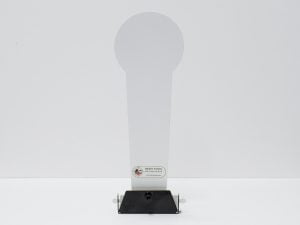
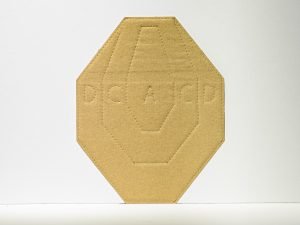
- IPSC or action air targets that scale down to your available distance. If you only have five meters, use reduced-size targets to keep the sight picture realistic.
- A shot timer app or a real timer. Without pacing, you are just plinking.
- A camera or a mirror to check your grip and stance. Video feedback cuts learning time in half.
- A safe area with no live ammunition nearby. This is non-negotiable. Store ammo separately.
If you shoot airsoft or action air at home, you also need eye protection and a pellet trap. The gear from Shoot N' Train is built for this exact use case. Their targets are designed to give clear hit feedback without falling apart after a few sessions.

Common Mistakes and How to Avoid Them
I have seen shooters buy expensive laser training systems that never get used because the setup takes too long. I have also seen people try to practice at full speed before they have a smooth draw. Here are the pitfalls that will waste your time:
- Practicing without a plan. Random draws and dry-fires do not build skill. You need a structured drill with a clear goal.
- Ignoring the reload. Everyone practices the draw. Few practice a slide-lock reload under a timer. That is where matches are won or lost.
- Using the wrong distance. If your home range is short, scale the target size down. A full-size IPSC target at three meters is too easy. Use a 25% or 50% version.
- Skipping the fundamentals. Grip, stance, and sight alignment never stop mattering. Home shooting training is the best place to refine them because you can take all the time you need.
- Not tracking progress. Without data, you cannot tell if you are improving. Keep a log of your draw times and hit rates.
Setting Up Your Space
I converted a corner of my garage into a five-meter lane. The wall is covered with a heavy rubber mat rated for airsoft. I hung a steel target frame that accepts cardboard or paper targets. On the floor I marked a shooting line with tape. That is it. The whole thing cost less than a single trip to a shooting school.
If you do not have a garage, a basement or even a long hallway works. The critical part is safety. Make sure the backstop stops everything. For dry-fire, a clear wall is fine if you unload and show clear before starting. For airsoft, you need something that absorbs the pellets without ricochet.
Lighting matters more than you think. A dim room hides sight movement. Put a bright lamp behind the target so you see the front sight clearly. That alone will improve your trigger control within a week.
Structuring a Session
A good home shooting training session lasts between fifteen and thirty minutes. Longer than that and you fatigue mentally. Here is a sample routine I use:
Warm-up (3 minutes): Ten slow, perfect draws. Focus on grip consistency. Do not worry about speed.
Trigger control (5 minutes): From a low ready, press the trigger without disturbing the sight picture. Reset after each shot. Do twenty reps.
Transitions (5 minutes): Set up two targets spaced a meter apart. Draw and fire one shot on each. Work on moving your eyes first, then the gun.
Reload drill (5 minutes): Start with an empty gun. Draw, fire a dry shot, reload, fire again. Repeat ten times.
Cool-down (2 minutes): Five slow draws with your eyes closed. Feel the grip and the trigger break.
Connect with us on Facebook.
That is a complete session. No wasted time. No boredom. You can do it before breakfast or after dinner.
Measuring Progress
Without feedback, you will plateau. I use a shot timer app on my phone and a simple logbook. Every week I note my best draw time, my transition split, and how many clean trigger presses I hit out of twenty. The numbers tell me when a drill is too easy or when I am rushing.
Video is better. Set up your phone on a tripod and record one string of fire per session. Watch it in slow motion. You will see the flinch you thought you fixed, or the slight dip in the muzzle during the reload. Fix one thing per week. That is sustainable progress.
When to Go Live
Home training is not a substitute for live fire. It is a force multiplier. You should go to the range at least once a month to confirm that your dry-fire skills transfer. When you do, focus on recoil management and target transitions at speed. Those are the only things you cannot practice at home without a live round.
I also recommend taking a class once or twice a year. A good instructor will spot things your camera cannot. But between classes, your home shooting training is what keeps you sharp.
Final Thoughts
The gear does not have to be expensive. A few good targets, a safe backstop, and a timer are enough. What matters is showing up every day and doing the work. If you are looking for targets and training tools that hold up to daily use, check out Shoot N' Train at Thermopilwn 17, Keratsini 187 57, Greece, or call them at +30 697 837 6939. They specialize in premium IPSC, action air, and airsoft targets for shooting practice and training. Their stuff is built for the kind of repetition that home training demands.